

From ‘School’ to ‘Academy’: Behind AFCT’s year of restructuring
In November 2024, staff at Xi’an Jiaotong-Liverpool University (XJTLU) received a campus-wide email from the Vice President for Academic Affairs. The message announced that the School of Film and Television Arts and the School of Cultural Technology – both under the Academy of Film and Creative Technology (AFCT) – would merge and enter a formal restructuring phase.
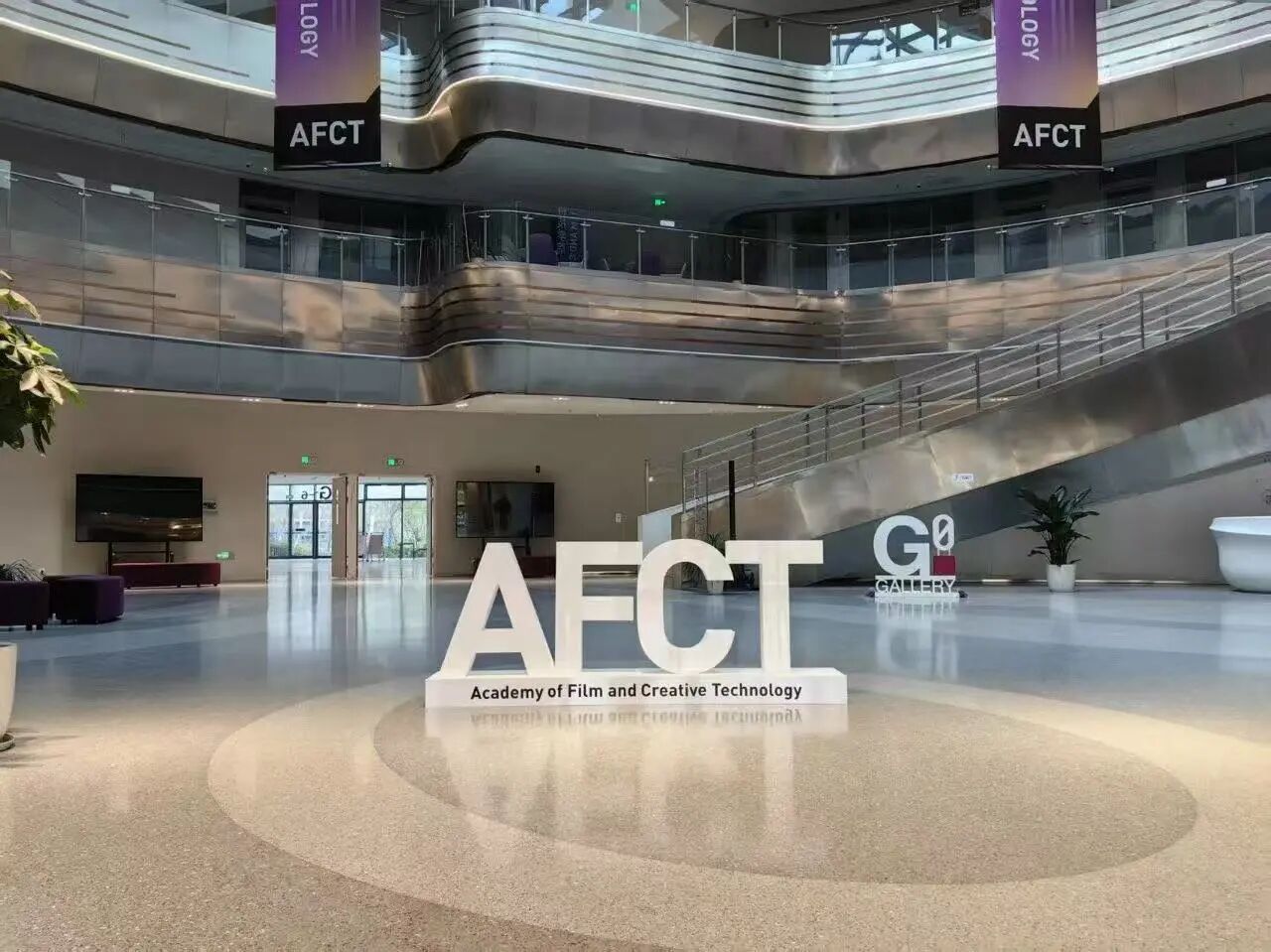
The reorganisation was led by Professor Qian Liu, Dean of AFCT, who had joined XJTLU less than six months earlier. From the outset, University leadership had tasked him with leading a major transformation of the Academy.
Rebuilding an Academy
The plan went beyond merging schools. Both the school layer and the traditional department structure were removed altogether. In their place, academic staff were regrouped into three main subject groups: digital technology, creative content generation, and entrepreneurship and industry.
As Executive President Professor Youmin Xi explains: “AFCT’s restructuring responds both to the gap between its current stage of development and its strategic ambitions, and to structural challenges that emerged in its day-to-day operation.”
While the restructuring progressed according to plan, Professor Liu spent considerable time explaining its rationale across multiple internal forums, addressing concerns and seeking consensus. The most common question was straightforward: without departments, how would academics define their professional identity?
“One of the core goals of this restructuring,” Professor Liu explains, “is to align staff deployment directly with our educational objectives.”
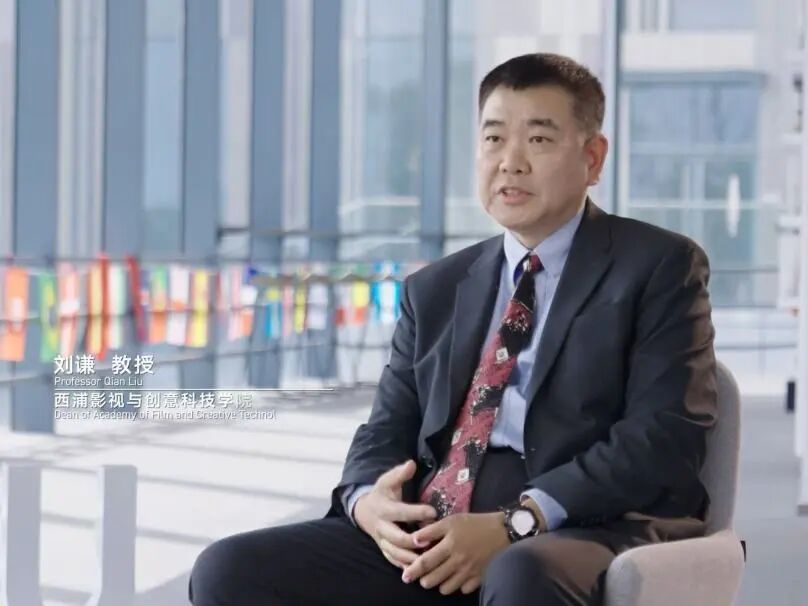
Professor Qian Liu
The new structure replaces discipline- and job-specific units with subject groups, enabling academic staff to contribute, based on their strengths, to teaching and research across multiple programmes.
Industry pressure and the question of talent
The restructuring was shaped by forces well beyond the University. In recent years, traditional filmmaking and TV production programmes have come under sustained pressure from the diversification of the digital creative industries.
Enrolment data offered a clear signal: while the Digital Media Arts programme expanded from just over a dozen students per cohort to nearly 100, traditional programmes such as Filmmaking and TV Production experienced steady contraction.This was not a simple case of shifting student preferences. “At its core, the change reflects a transformation in how content is produced and what kinds of talent the industry now demands,” Professor Liu notes.
Digital Media Arts gained momentum by emphasising interdisciplinary training, multiple skill sets, and hands-on creative practice. By contrast, traditional programmes with narrowly defined boundaries struggled to keep pace with rapid industrial change.
Against this backdrop, Professor Liu’s first move as Dean was not to revise curricula or introduce new technologies, but to redefine the Academy’s mission and vision. The aim was to realign AFCT with the evolving industry and its talent needs. This was not a reaction to a short-term trend, but to a structural shift: the production of audiovisual content itself was being transformed, with diversity and innovation becoming defining features of the industry.
“In the past, film and television education was organised around departments, with creative work and teaching largely separated, and training closely tied to specific media and job roles,” Professor Liu says. “That premise no longer holds.”
Today, films, television programmes, advertising, museum exhibitions and other forms of media no longer sit within fixed boundaries. They circulate as digital content across screens, platforms, and contexts.
From job-based to capability-based education
In this environment, traditional job-oriented education has revealed its limits. Roles evolve, disappear, and re-emerge rapidly. At the same time, digital technologies and artificial intelligence have increased efficiency, reduced costs, and shortened production cycles, rendering narrow skill-based training – such as focusing solely on shooting or editing – insufficient.
AFCT’s response was to redefine its educational goal: to cultivate creative talent for audiovisual content in digital formats, rather than specialists for film or television alone.
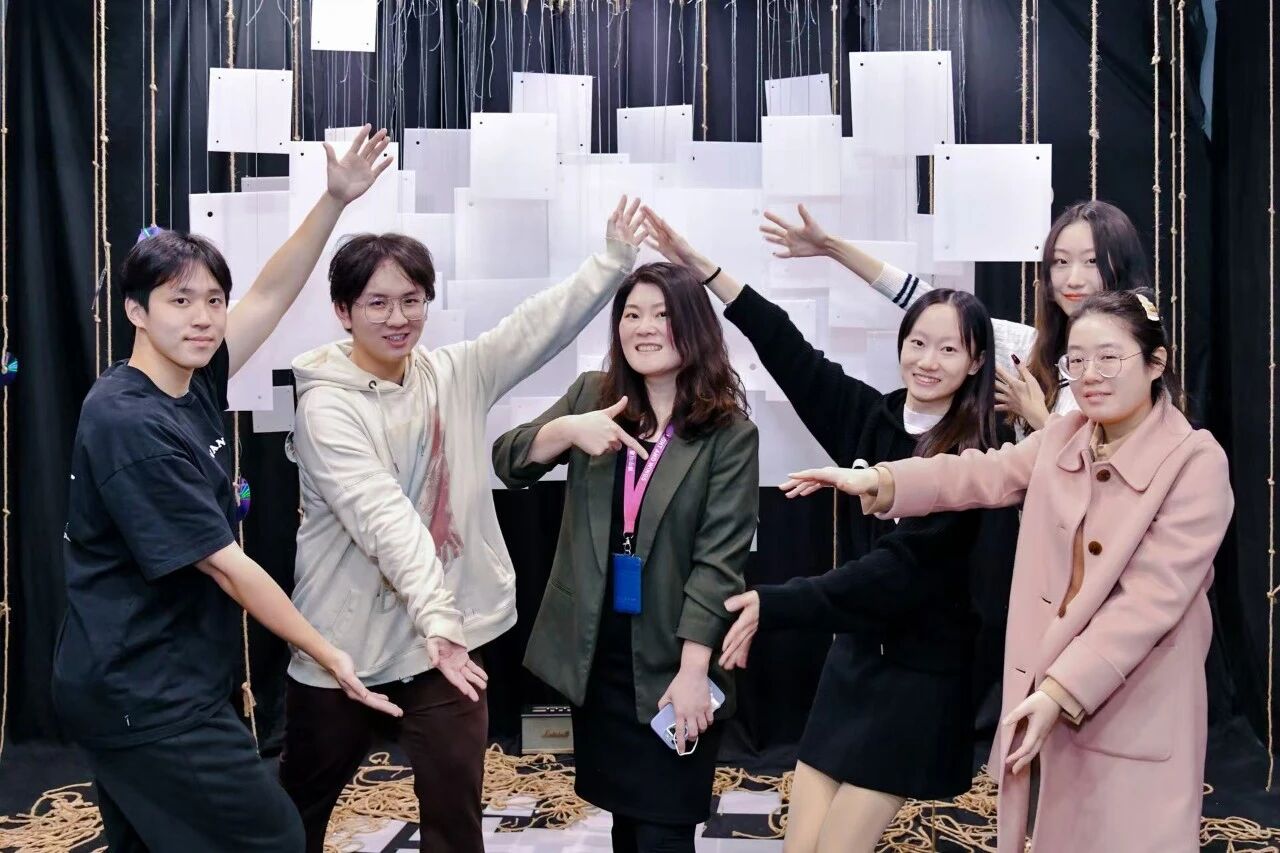
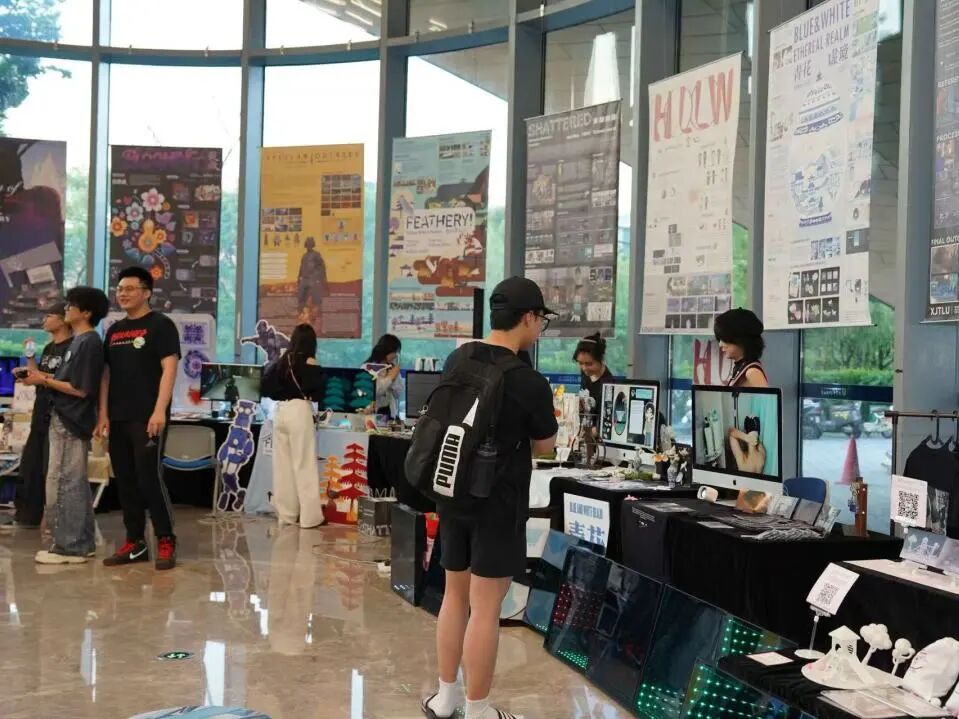
Fang Liu (third from left)
Accordingly, the Academy adopted a capability-based model structured around three core dimensions: digital technologies and tools; creative content generation; and understanding of industry operations and entrepreneurship. The premise is simple: while content forms, platforms, and applications vary, audiovisual production consistently relies on digital tools, platforms, and systems.
This logic was embedded in AFCT’s organisational design. By replacing departments with subject groups, the academic staff structure now directly supports educational objectives.
Breaking silos: designing for agility and transparency
Associate Dean Fang Liu, formerly director of the Digital Media Arts programme, recalls the invisible barriers of the old structure. Students were often unable to take modules outside their programme, and academic staff interested in cross-disciplinary teaching faced numerous constraints. Even minor curriculum changes could take an entire semester to coordinate.
The organisational structure had become a set of silos, characterised by high communication costs and slow decision-making. Curriculum reform was difficult, and resources were inefficiently allocated.
Only after the new structure was in place did meaningful curriculum reform begin. Flattening the hierarchy and adopting a matrix-style organisation significantly shortened decision chains and improved operational efficiency.
“This structural change was the precondition for curriculum reform,” Fang Liu notes. “Once we agreed that all academic staff belong to one academy, rather than ‘your programme’ or ‘my programme’, collaboration became possible.”Under her leadership, AFCT broke down curricular barriers across four undergraduate programmes, achieving over 60% shared core modules. Training now centres on capability-oriented, project-based learning, with the final year dedicated to personalised capstone projects.
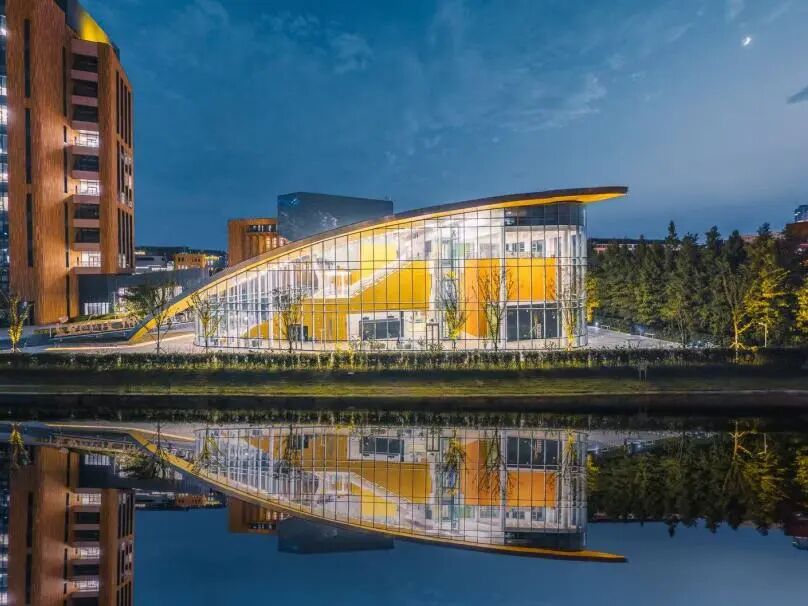
She likens the new curriculum to a pyramid: a shared foundation of core capabilities; intermediate modules and projects tailored to different pathways; and a peak of individualised, advanced outcomes.
Staff management also changed. Teaching assignments and performance evaluation are now coordinated through the three subject groups, using transparent data on course loads and student numbers. Staff support multiple projects rather than a single programme, reducing duplication and improving quality.
A dome theatre and a strategic choice
In December 2025, a dome theatre – rare in university settings – opened at XJTLU Entrepreneur College (Taicang). With an 18-metre diameter, 8K resolution, and immersive surround sound, it has become one of the campus’s most striking spaces.
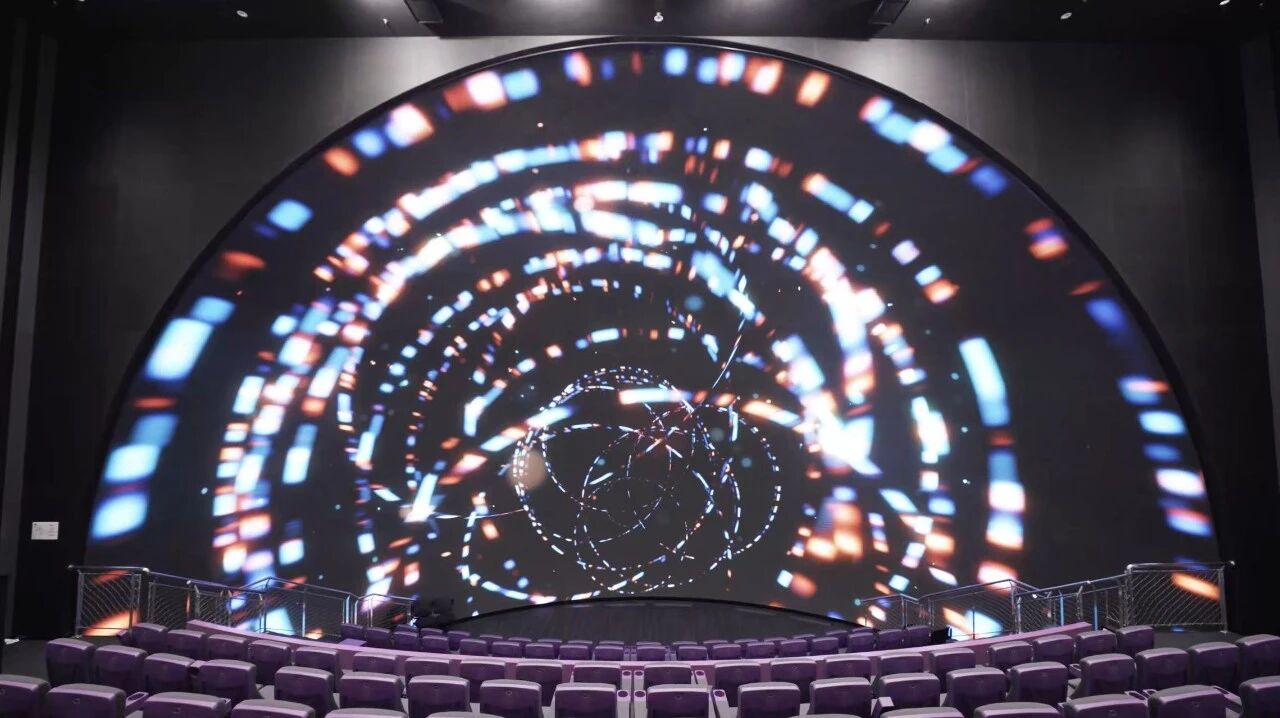
Yet the significance lies not in the specifications, but in what it represents. Why place an emerging, specialised immersive medium at the centre of AFCT’s development?
For University leadership, appointing a new Dean and restructuring AFCT was an exploratory strategic move: how might an academy operate sustainably across two campuses and three education models?
Drawing on years of international industry experience, Professor Liu chose the dome as a testing ground – an immersive medium that extends cinematic storytelling while offering irreplaceable public experiences. The dome anchors a broader vision: an integrated platform for creation, research and teaching, and the launch of an International Immersive Media Creation Alliance.
This integrated design positions AFCT as a deliberate “first mover”. In Executive President Professor Xi’s thinking, it is not a template to be copied, but a pilot in practice: an early exploration of how XJTLU’s distinctive Academy model can operate, coordinate, and renew itself within a complex configuration spanning two campuses, three education models, and close links to corporatised platforms and industry partners.
The significance of this exploration lies precisely in its openness. The challenges confronting AFCT closely resemble those faced by other Academies now undergoing restructuring. Its value, therefore, is not to supply ready-made answers, but to clarify, through practice, the operating logic of a complex system, generating experience that can inform future innovation.
By Bo Kou and Wenzhen Li
Edited by Patricia Pieterse
Legal Disclaimer:
EIN Presswire provides this news content "as is" without warranty of any kind. We do not accept any responsibility or liability for the accuracy, content, images, videos, licenses, completeness, legality, or reliability of the information contained in this article. If you have any complaints or copyright issues related to this article, kindly contact the author above.
